
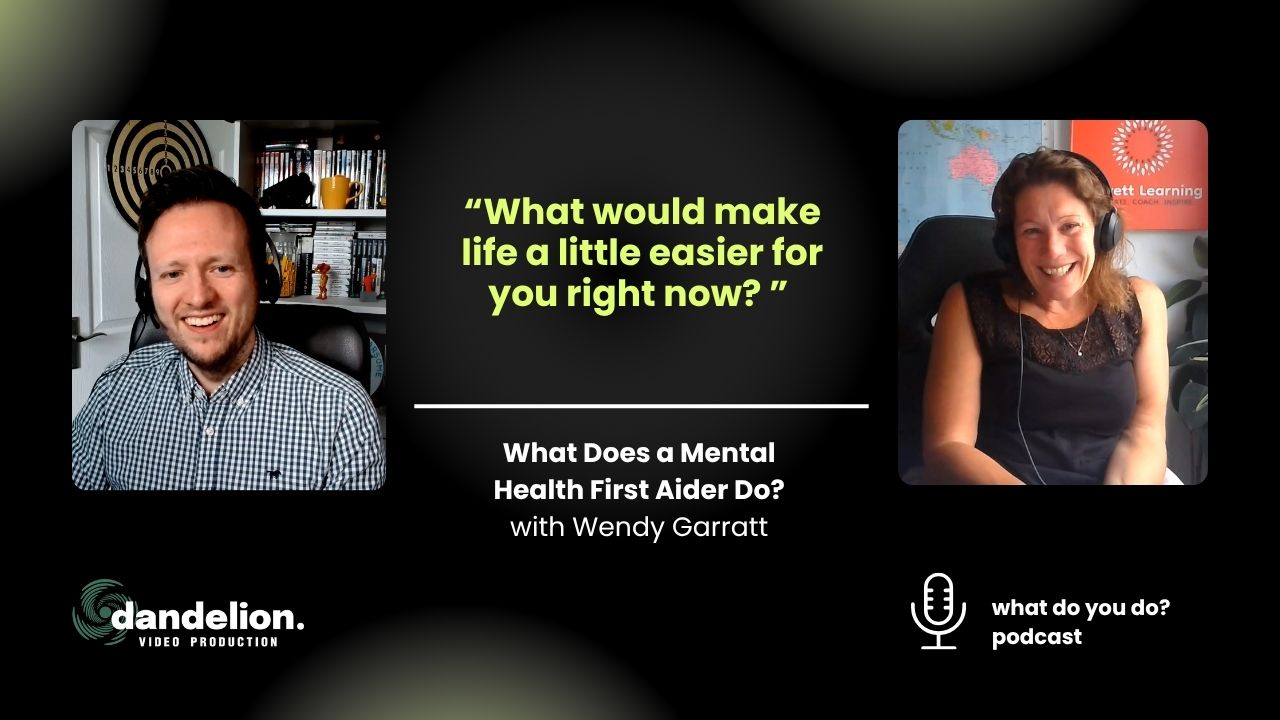
What Do You Do? podcast
Wendy Garratt | Garratt Learning
When we talk about first aid we usually assume, and it’s easy to picture, physical first aid. Someone has received a workplace injury and needs to be immediately cared for, potentially before an ambulance turns up.
But what about mental health first aid? If your workplace has mental health first aiders, would you know when you should turn to them, and more importantly, would you?
In this episode of the What Do You Do? podcast, Wendy Garrett explains exactly what Mental Health First Aiders do, and just how they can support people in the workplace.

Key Takeaways
- Mental health first aiders can improve wellbeing, reduce presenteeism, lower mistakes, and support productivity and safety.
- Supporting others can be emotionally heavy, so mental health first aiders need boundaries, peer support, and time to recharge.
- Using respectful, non-judgmental language helps reduce stigma and makes mental health conversations feel safer.
The Role of a Mental Health First Aider
Early Warning Signs
A mental health first aider is trained to notice the early signs that someone may be facing difficulties. That could include changes in mood, sleep, eating habits, energy, or behaviour. Wendy explains that mental health first aiders aren’t there to diagnose conditions or act as a therapist. Instead, their job is to spot those early warning signs, check in, and help the person find the right next step. Early intervention is crucial, as of course, small problems can get much worse if they’re ignored. A mental health first aider tries to prevent that by providing support before a crisis develops.
What Support Looks Like in Practice
One of the most practical parts of the conversation was Wendy’s advice on how to speak to someone who may be struggling. If a colleague opens up, the first priority is privacy. That might mean stepping away from the desk, going for a walk, finding a quiet room, or arranging time for an uninterrupted conversation.
Wendy stressed how important it is to remove distractions like phones, emails, and notifications so the other person can talk freely. The goal is not to jump in and fix the problem. It’s to listen carefully and ask what the person needs right now. That question matters because it shifts the focus away from assumptions. Instead of deciding what would help, the mental health first aider asks the individual what would actually make life easier in that moment.
Mental health first aiders are not there to diagnose, solve, or take over. They’re there to notice, listen, and guide. In workplaces where people feel safe enough to speak honestly, support can happen earlier, stress can be reduced, and outcomes can improve for both individuals and organisations.
What Do We Do?
We founded the What Do You Do? podcast to hear from people like Wendy, to understand what their business can do to help yours.
Videos, like the one above, are a great way to educate your customers about what you do – find out how we can do it here.
written by
Videographer and video producer with over 15 years experience in both B2B and B2C video marketing. He writes about everything he learned delivering over 1200 video projects across the engineering, education, charity and tech sectors.
