

What Do You Do? podcast
Kate Wilkinson | Transform Counselling UK
Most people understand what a counsellor does – you talk to them about a problem you’re facing and they help you. But how do they help you? What kind of problems can they help you with? Where do they stand out when compared to a Psychotherapist or a Mental Health First Aider?
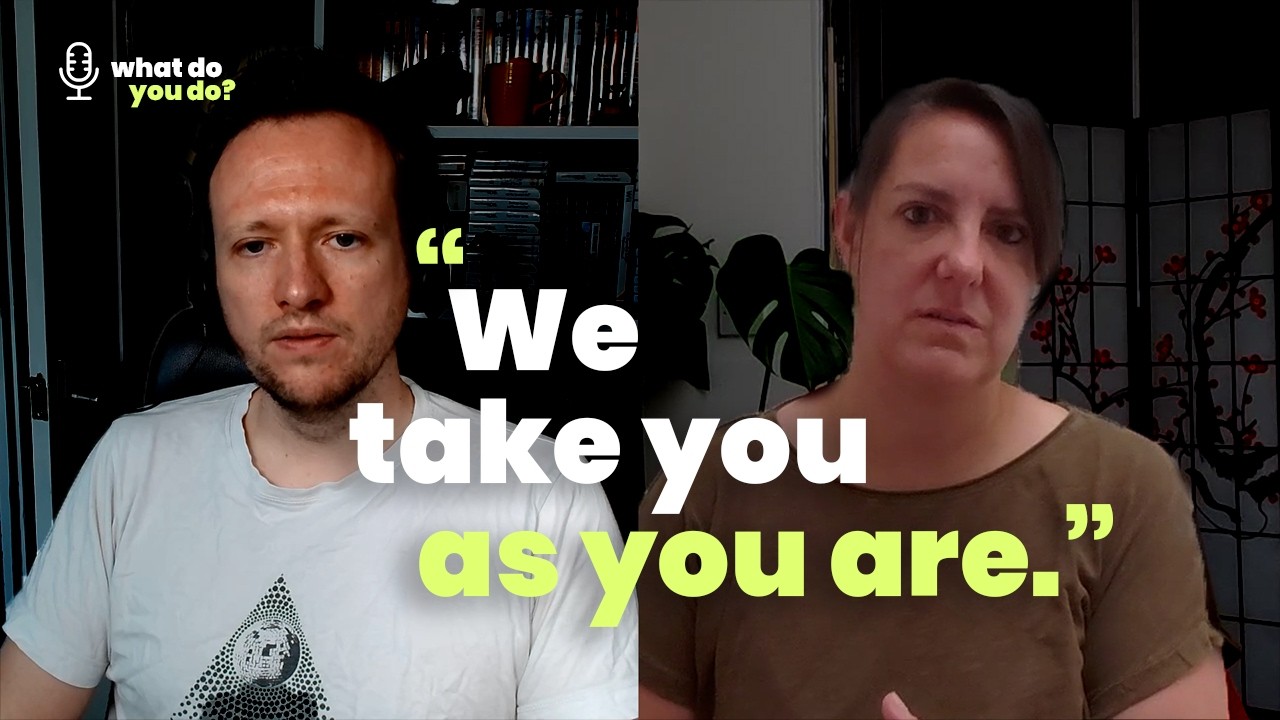
All of these questions and more will be answered in this episode of the What Do You Do? podcast, where Counsellor Kate Wilkinson explains how counsellors can help you with a range of problems, what kind of problems, and why you shouldn’t wait until they’re “serious enough”.
Key Takeaways
- Counsellors provide a supportive, non-judgmental space to explore difficult feelings and situations.
- Counselling is not about being “fixed” – it helps you understand yourself and find your own answers.
- Counselling has limits and is not a crisis service; urgent issues need specialist support.
The Role of a Counsellor
Providing a Safe Space
A counsellor is there to support you through difficult or confusing periods in your life. That starts with providing a safe space where you can be open about the challenges that you’re facing, free from the judgement of pre-conceived notions or pre-exisiting relationships.
As many people still view mental health and private care as a luxury, the assumption is that counselling is only for severe problems, but that’s not the case. Clients might come in for relationship challenges, stress and burnout, ADHD-related questions, perimenopause concerns, or even low confidence, and anxiety.
The key point is that you don’t need to wait until things become “serious enough.” If something is difficult for you, that is enough reason to seek support.
A Counsellor Can’t Fix You
A major misconception about counselling and mental health support in general is this belief that someone else can fix you, like a surgeon removing a tumour, or a nurse setting a broken bone. I see it more similarly to physical therapy; a counsellor can help you discover what exercises will help, but you need to do them yourself.
Counsellors don’t tell you what to do or make decisions on your behalf. Instead, they help you think things through in a different way so that you can arrive at your own conclusions. This is important, because advice alone rarely creates lasting change. If someone simply tells you what to do, the solution usually doesn’t stick unless you understand it and choose it for yourself.
Ultimately, counselling is not about being judged, fixed, or told what to do. It’s about having a safe, structured space where you can explore what’s going on and begin to understand yourself more clearly.
What Do We Do?
We founded the What Do You Do? podcast to hear from people like Kate, to understand how you can improve your mental health.
Videos, like the one above, are a great way to educate your customers about what you do – find out how we can do it here.
written by
Videographer and video producer with over 15 years experience in both B2B and B2C video marketing. He writes about everything he learned delivering over 1200 video projects across the engineering, education, charity and tech sectors.
