
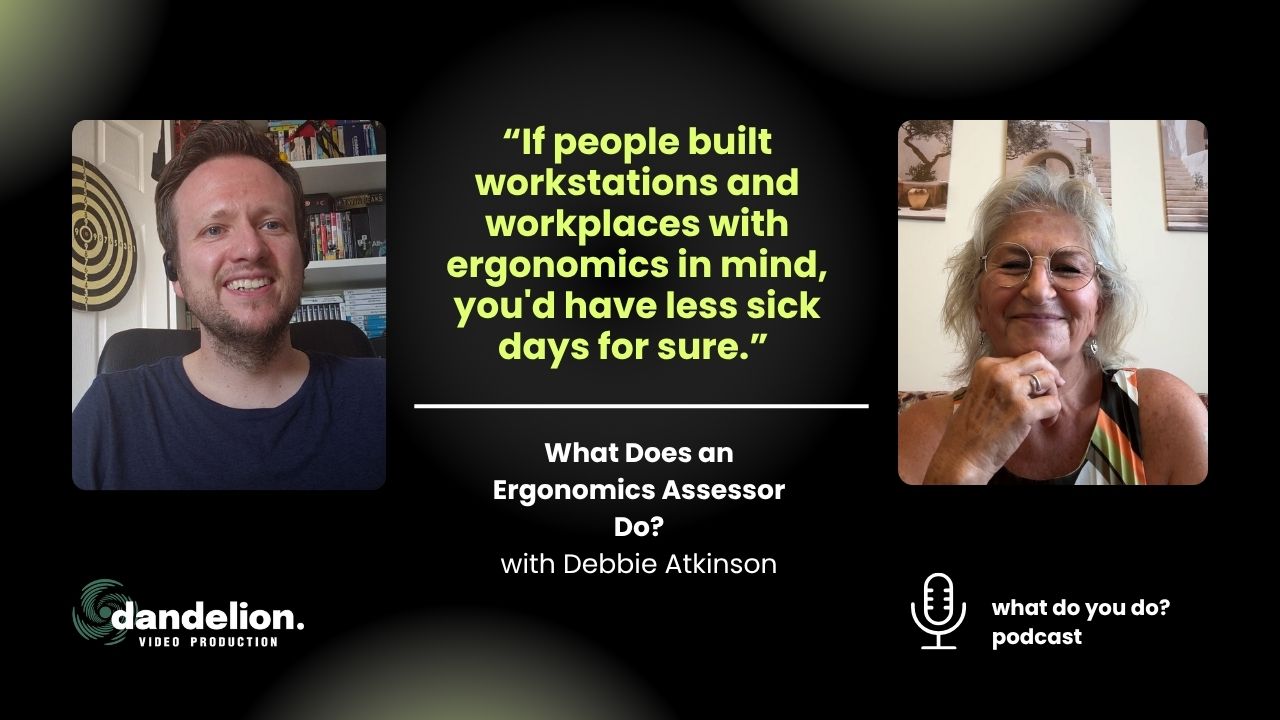
What Do You Do? podcast
Debbie Atkinson | Wyvern Business Systems
When it comes to ergonomics, Ergonomics Assessor Debbie Atkinson states it plainly;
“A lot of people don’t think that ergonomics is a necessary thing to do.”
After all, ergonomics is about comfort, and when we talk about comfort, we think about the soft side of it. We don’t think about how discomfort can lead to headaches, back pain and other musculoskeletal issues. We don’t think about how those things can then lead to lost productivity, or sick days (with as many as 7.1 million days lost each year).
But a few simple changes, at either the design stage, or later on in the work or home environment, can lead to increased comfort, physical wellbeing and productivity.

Key Takeaways
- The majority of the time, large changes aren’t required. Even some small changes can make a huge difference.
- Even a headache can reduce overall productivity. Taking measure to prevent discomfort offers a clear productivity boost.
- However, ergonomics is also about compromise. With many people working from home, completely ergonomic solutions may not fit in the required space.
The Role of an Ergonomics Assessor
The Basics of Ergonomics
An ergonomics assessor specialises in evaluating and improving the comfort and safety of work environments. Debbie Atkinson shares that her role involves visiting various workplaces, such as universities, private companies, and even private homes, where people experience discomfort due to their workspace setup.
Debbie’s primary focus is on helping people who might have disabilities, limbs differences, or other conditions that make sitting or working for extended periods uncomfortable. The goal is to tailor the workspace to meet each person’s unique needs, ensuring they can work comfortably and efficiently.
As an example, Debbie mentions that for someone with limb differences, sitting for long durations may be impossible without intervention. Her job is to identify these challenges and recommend solutions, such as specialised seating, adjustable desks, or supportive devices that enable better posture and reduced pain.
Why is Ergononics so Important?
Many organisations unfortunately undervalue ergonomics, thinking it’s just about tweaking a chair height. However, Debbie highlights that ergonomics significantly impacts health and productivity. Each year, around 7.1 million workdays are lost due to musculoskeletal aches and pains like back, neck, and wrist issues, which adds up to a staggering 364 million days globally.
Why does this matter? Because many of these issues are preventable through simple adjustments. Poor workspace design can lead to reduced productivity, increased sick days, and long-term health problems. Debbie states that even minor discomforts, like headaches caused by poor posture, can affect work performance. A common misconception is that adjusting a chair or desk is trivial. But Debbie stresses that investing in ergonomic improvements can produce a “win-win” situation: healthier, more comfortable employees and less downtime for employers.
What Do We Do?
We founded the What Do You Do? podcast to hear from people like Debbie, to understand what their business can do to help yours.
Videos, like the one above, are a great way to educate your customers about what you do – find out how we can do it here.
written by
Adam Hanslow-Smith is a videographer and video producer with over 15 years experience in both B2B and B2C video marketing. He writes about everything he learned delivering over 1200 video projects across the engineering, education, charity and tech sectors.
